Interview with
Tif Robinette

KMWR: Can you tell us about what it was like writing the first draft of “Additional Elegancies for Additional Cost"? I have many readers still being haunted by Ol' Smokefoot. Paul, also, is a reluctant hero and unforgettable character. How did these two come about?
TR: Like many story ideas, this one festered in my notes app for months before I started typing. I saw this newspaper ad and immediately was drawn in with morbid questions.
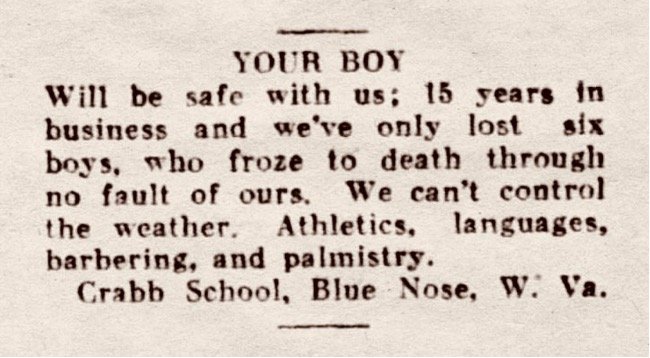
Published in El Paso Herald, Texas, 1928
Who ran this bizarre boy's school in the backwoods of West Virginia–my home state–? What really happened to those poor boys? I used the ad to build out a story-world and characters, but wanted to add a folkloric twist, like a big bad wolf.
Ol’ Smokefoot came out of my research on the Victorian ghoul “Spring-Heeled Jack” who was widely witnessed attacking women at night, reportedly ripping women’s clothing off and assaulting them. In a time when rape was pervasive but unmentionable, this fiend became the hook to hang repressed societal violence. I was interested in Ol’ Smokefoot as both a creepy cryptid symbolic entity and the hook to hang the exploitation of the school.
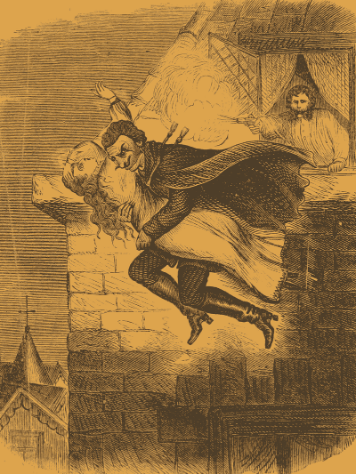
Illustration of Spring-heeled Jack, from the 1867 serial Spring-heel'd Jack: The Terror of London
As for developing Paul’s character, I wanted to push myself to write from a young boy’s perspective, one that is outside of my embodied experience. I was particularly inspired by Flannery O’Connor’s The River, which is written from a young boy’s POV and has a wonderfully developed child’s logic.
As I wrote–and rewrote–Paul, I found a lot of myself in him, both of us are fairly haunted and sometimes brave. I want to see what happens to him next, so I already have more serialized Buggy stories brewing.
KMWR: What draws you to the horror genre and to the literary monster?
TR: I am interested in horror as a literary lens to view personal and societal fears. A monster is a hook to hang our dirty laundry on, the grotesque parts of ourselves and communities that are hard to look at on their own.
KMWR: In your author bio, you describe short stories as a way to come up for air from novel writing. I'd love to know your thoughts about how writing short prose adds to the skill of crafting novel-length works. What do you take away from short stories and what do you leave behind when returning to the novel?
TR: There is no time to wander off into indulgent tangents in a short story. I like that immediacy and demand that I don’t get too caught up in waxing eloquent rather than just trying to tell a story that feels true. It’s also satisfying to finish something in a shorter amount of time. Novel writing has daily rewards on the page, but feels like it is never actually finished, even after completing drafts. Short story writing forces me to hit the story in the sweetest spot.
My revision motto lately: “Does this (character/description/plot beat, etc) serve the heart of the story?”
This mindset really comes out of short story writing, where every word is carefully counted.
KMWR: What is your ideal writing session, and what do you like to have nearby as you write?
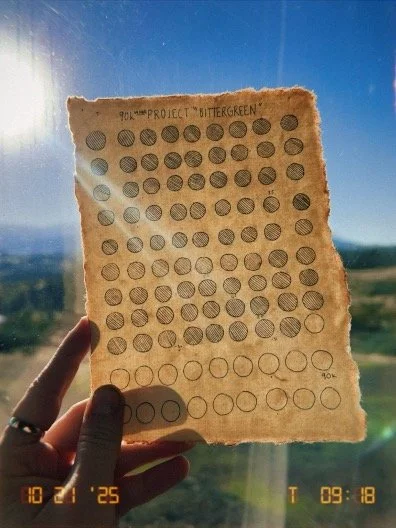
TR: I try to write 1000 words a day, whether it be revision plans, outlining, or in the manuscript. I’ve found that daily discipline is annoyingly effective for me. I developed this moon system for my writing: